
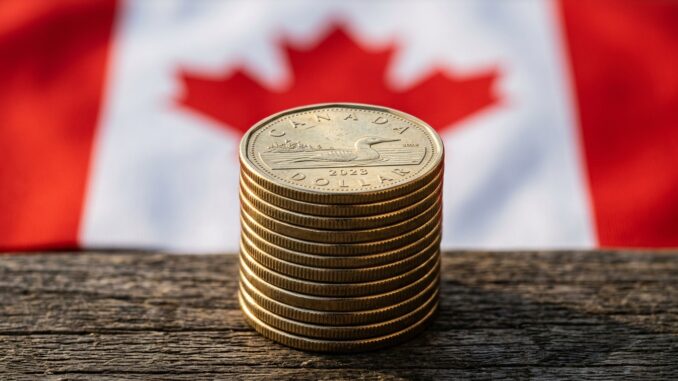
The Canadian dollar, widely known across global financial markets as the loonie, has successfully climbed to a four week high against its United States counterpart. This significant upward momentum materialized shortly after the Bank of Canada delivered its highly anticipated monetary policy decision. While the domestic currency did experience a notable boost in its overall valuation, financial analysts and market strategists were quick to observe that the currency’s upward trajectory was ultimately limited in scope. This limitation is primarily attributed to the central bank’s deliberate decision to omit specific hawkish language from its forward looking economic guidance.
By stepping away from aggressive rhetoric regarding future rate hikes, the Bank of Canada has signaled a more balanced and cautious approach to managing the nation’s economic landscape. For investors, businesses, and everyday consumers, understanding the intricacies of this central bank decision and its subsequent impact on currency markets is vital for navigating the complex financial environment of the current year.
Table of Contents
The Bank of Canada Interest Rate Decision Explained
Maintaining the Status Quo at 2.25 Percent
In a move that aligned perfectly with the widespread expectations of leading economists and financial institutions, the Bank of Canada elected to leave its benchmark interest rate completely unchanged at 2.25 percent. This marks the sixth consecutive policy meeting where the central bank has chosen to maintain the status quo, effectively pausing the aggressive monetary tightening cycle that characterized previous years. The decision to hold the policy interest rate steady provides a much needed sense of stability and predictability for the domestic financial sector.
In its official statement accompanying the interest rate announcement, the Governing Council expressed a cautious but underlying optimism regarding the trajectory of the national economy. The central bank noted that economic growth is widely expected to strengthen and gather significant momentum in the second half of the year. This projected economic resurgence is heavily predicated on the ongoing observation that domestic inflationary pressures are finally beginning to ease. As the cost of everyday goods and services stabilizes, household purchasing power is expected to recover, thereby stimulating broader economic activity.
However, the decision to hold the rate at 2.25 percent is not without its underlying complexities. The Bank of Canada must constantly balance the need to suppress lingering inflation against the equally important mandate of fostering sustainable economic growth. By holding the rate steady for six consecutive meetings, policymakers are essentially allowing the previous rate hikes to fully permeate the economy. Monetary policy operates with infamous time lags, meaning the true restrictive impact of higher borrowing costs on consumer spending, corporate investment, and the housing market takes months, if not years, to fully materialize.
Analyzing the Canadian Dollar Market Reaction
A Four Week High for the Loonie
Immediately following the publication of the Bank of Canada interest rate decision and accompanying monetary policy report, the domestic currency experienced a measurable surge in demand on global foreign exchange markets. The canadian dollar was actively trading 0.2 percent higher, reaching a level of 1.4032 per United States dollar. To phrase it differently for cross border consumers, the loonie was valued at 71.27 United States cents. This specific valuation marks the currency’s absolute strongest trading level since mid June, providing a brief but welcome reprieve for importers and travelers.
When financial analysts study the us dollar to the canadian dollar exchange rate, they are looking at one of the most heavily traded currency pairs in the world. The dynamics governing the canadian dollar u s dollar relationship are influenced by a massive volume of cross border trade, deeply integrated supply chains, and differing monetary policy approaches between the Bank of Canada and the United States Federal Reserve. For everyday citizens and corporate treasurers looking to convert american money to canadian dollar, the recent fluctuations represent a prime opportunity to lock in slightly more favorable exchange rates.
Despite achieving a four week high, the currency’s inability to break through higher resistance levels indicates that market participants are still exercising caution. The canadian dollar to us dollar ratio is highly sensitive to the perceived future actions of central banks. Because the Bank of Canada offered a relatively neutral outlook, traders lacked the fundamental catalyst required to push the currency into a sustained, long term bullish trend.
Governor Tiff Macklem Strategic Shift in Tone
Moving Away from Hawkish Rhetoric
One of the most heavily scrutinized elements of any central bank announcement is the specific language and tone used by its leadership. In this regard, Governor Tiff Macklem delivered a subtle but highly impactful shift in messaging. In the written statement and subsequent communications, Governor Macklem deliberately dropped the more aggressive, hawkish comments he had utilized during the previous policy meeting in June.
During that prior meeting, Macklem had explicitly warned financial markets that there could be a distinct need for consecutive interest rate increases if inflation were to experience a sudden and unexpected spike. By removing this explicit threat of rapid, consecutive monetary tightening, the central bank has effectively adopted a more balanced and neutral stance. Strategists at prominent financial institutions, including TD Securities, were quick to highlight the implications of this rhetorical shift.
According to these financial experts, a balanced outlook from the Bank of Canada simply does not provide the necessary fundamental fuel to drive massive gains for the domestic currency. When a central bank signals that it is comfortable with current interest rate levels and sees balanced risks to the economic outlook, currency traders typically look elsewhere for yield and momentum. Consequently, the currency’s upward move was capped, as investors digested the reality that higher, yield generating interest rates are likely off the table for the foreseeable future.
The Broader Global Currency Market Context
How the United States Dollar is Faring
To fully comprehend the recent movements of the loonie, it is absolutely essential to look beyond domestic borders and analyze the broader global currency market. The recent strength of the domestic currency was actually heavily facilitated by a broad based decline in the value of the United States dollar against a wide basket of major international currencies. This widespread depreciation of the greenback was primarily triggered by the release of softer than expected producer price index data in the United States.
The underlying inflation data in the United States suggested that price pressures at the wholesale level are cooling faster than many economists had initially anticipated. This development strongly bolstered the prevailing market view that the Federal Reserve can afford to remain patient and delay any potential interest rate hikes. As expectations for higher United States interest rates diminish, the yield advantage of holding american currency decreases, prompting investors to sell the greenback. For those monitoring the transfer of wealth from us to canadian dollar, this weakness in the greenback was the primary catalyst for the loonie’s four week high.
Global Currency Comparisons
While the North American financial theater commands the most attention, the performance of the domestic currency against other major global counterparts provides crucial context. For instance, the euro to canadian dollar exchange rate is closely monitored by European investors and multinational corporations. Fluctuations in the canadian dollar euro spread can deeply influence the profitability of transatlantic trade agreements and foreign direct investment into domestic manufacturing sectors.
Similarly, evaluating the japan yen to canadian dollar relationship helps macroeconomists understand the flow of capital between the Asian and North American markets. Because the Japanese yen is traditionally viewed as a safe haven asset, changes in its value relative to the loonie can indicate broader shifts in global risk appetite. When global investors are confident, commodity linked currencies often appreciate against safe havens, a dynamic that constantly shapes the daily valuation of the national currency on the world stage.
The Deep Impact of Oil Prices on the National Economy
Volatility in the Energy Sector
It is virtually impossible to analyze the performance of the national currency without deeply examining the global commodities market, particularly the energy sector. Canada remains one of the world’s premier exporters of crude oil, and the financial health of the nation is heavily dependent on energy revenues. During the trading sessions surrounding the central bank interest rate decision, the global price of oil experienced notable downward pressure.
Crude oil was actively trading 0.5 percent lower, hovering around 78.95 dollars a barrel. This slight depreciation meant that the commodity was giving back some of the sharp, unexpected gains it had accumulated earlier in the week. Because the loonie is widely classified by foreign exchange traders as a commodity currency, falling oil prices naturally act as an anchor, dragging down the currency’s value.
The fact that the currency managed to reach a four week high despite a simultaneous drop in global oil prices underscores just how significantly the weakness of the United States dollar played a role in the day’s trading activity. However, looking forward, if oil prices continue to face downward pressure due to concerns over global economic growth or shifting geopolitical tensions, the domestic currency will likely face immense fundamental headwinds that could erase its recent gains.
Market Speculation, Swap Markets, and Bond Yields
Bearish Bets and Government Bonds
While the immediate headline focused on the currency reaching a four week high, a deeper dive into the underlying data reveals a much more cautious and skeptical professional trading environment. According to official data released by the United States Commodity Futures Trading Commission, institutional speculators have actually aggressively raised their bearish bets against the domestic currency. In fact, these negative positions have surged to their highest levels since the beginning of the previous year.
This high concentration of bearish bets indicates that massive hedge funds and institutional currency traders heavily anticipate that the loonie will weaken in the coming months. They are essentially wagering millions of dollars that the currency’s recent strength is a temporary anomaly rather than the beginning of a sustained upward trend.
In the fixed income markets, domestic government bond yields moved lower across the entire yield curve, closely tracking similar downward movements in United States Treasuries. The yield on the benchmark 10 year government bond fell by 3.8 basis points to settle at 3.536 percent. This decline occurred shortly after the yield had briefly touched its highest level since late May at 3.596 percent.
Furthermore, activity in the overnight index swap market indicates shifting expectations regarding future monetary policy. The swap market was actively pricing in exactly 15 basis points of monetary tightening from the Bank of Canada by December. This represents a slight decrease from the 17 basis points of tightening that were priced into the market immediately prior to the central bank rate decision. This subtle shift in pricing perfectly reflects the market interpretation of Governor Macklem less hawkish tone, cementing the belief that aggressive rate hikes are highly unlikely in the near term.
Related: Can Canadian Dollar Stage a Powerful Rebound Against the US Dollar in the Second Half of 2026?
Frequently Asked Questions
How much is 1 Canadian dollar to US dollar?
The exchange rate between the two currencies fluctuates constantly based on open market trading. As highlighted during the recent market movements, one Canadian dollar was trading at approximately 71.27 United States cents. This means that for every single Canadian dollar you exchange, you receive roughly 0.71 US dollars in return. It is always highly recommended to check live financial platforms for the exact, up to the second conversion rate before making any major financial transactions.
How much is 100 US dollars in Canadian?
To determine the value of 100 United States dollars in Canadian currency, you must look at the inverse exchange rate. Based on the trading figures where the currency pair was positioned at 1.4032 per United States dollar, converting 100 US dollars would yield approximately 140.32 Canadian dollars. This premium reflects the current strength of the American currency relative to its northern counterpart.
Is CAD going up or down?
The trajectory of the currency is subject to intense daily volatility. In the immediate short term discussed following the central bank meeting, the currency went up, hitting a four week high against the greenback. However, looking at the broader macroeconomic picture, institutional speculators have massively increased their bearish bets, suggesting they believe the currency will eventually trend downward in the medium to long term due to economic headwinds and shifting interest rate differentials.
Why is CAD so weak against USD?
The comparative weakness of the domestic currency against the United States dollar is driven by several massive macroeconomic factors. Primarily, the United States economy has demonstrated incredible resilience, leading the Federal Reserve to maintain higher interest rates which attract global investment capital. Additionally, as a commodity linked currency, fluctuations in global oil prices heavily impact the loonie. When investors seek a safe haven during times of global geopolitical uncertainty, they overwhelmingly purchase United States dollars, further widening the valuation gap between the two currencies.
Will the Canadian dollar get stronger against the US dollar in 2026?
Predicting long term currency movements involves analyzing countless variable economic indicators. For the currency to gain significant, lasting strength against the greenback throughout 2026, several things would likely need to occur. The Bank of Canada would need to adopt a much more aggressive stance on interest rates compared to the Federal Reserve. Furthermore, a sustained, massive rally in global oil and commodity prices would provide essential fundamental support. Without these catalysts, analysts expect the currency to remain relatively range bound, primarily reacting to the policy decisions made south of the border.
Leave a Reply