
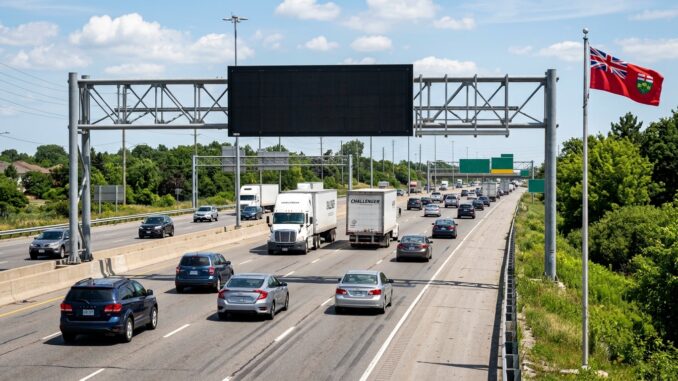
The landscape of driving in Canada’s most populous province has fundamentally shifted. If you operate a motor vehicle on provincial roads, you are now navigating one of the most consequential and transformative batches of legislative driving law changes Ontario has witnessed in decades. With multiple, far-reaching provisions officially taking effect in late June and July 2026, the provincial government has fundamentally rewritten the rulebook for private motorists, commercial transport operators, towing companies, and newcomers to Canada.
These regulatory overhauls are primarily bundled under several high-profile pieces of legislation, most notably the Safer Roads and Communities Act Ontario 2026, the highly debated Reducing Gridlock Saving You Time Act Ontario, and comprehensive amendments to both the Highway Traffic Act and the Towing and Storage Safety and Enforcement Act. The explicit goal of these sweeping changes is multifaceted: eradicating the devastating impacts of impaired driving, combatting the sophisticated rise of fraudulent licence holders, applying rigorous oversight to commercial vehicle operators and tow truck companies, and streamlining infrastructure.
For the everyday driver, the commercial operator, and the new resident, ignorance of these new laws is not a valid legal defense. This article serves as your definitive, deep-dive guide into every single Ontario driving rule now in force as of July 2026, along with critical forward-looking changes such as the newly announced MTO commercial license rules 2027. We will break down exactly what has changed, the underlying reasons for these legislative shifts, and precisely what these mandates mean for your daily commute, your livelihood, and your legal standing in the province.
Table of Contents
A Paradigm Shift in Ontario Road Safety and Enforcement
Before diving into the specifics of the new regulations, it is crucial to understand the broader context of what is happening on Ontario’s roads. The year 2026 has been marked by an exceptionally aggressive legislative agenda focused on transportation, enforcement, and public safety. The government has prioritized a zero-tolerance approach to high-risk driving behaviors while simultaneously attempting to alleviate financial pressures on law-abiding citizens through fee freezes and systemic efficiencies.
This is not merely a collection of minor tweaks to existing traffic laws. The Safer Roads and Communities Act Ontario 2026 represents a total paradigm shift. It moves enforcement away from the deeply backlogged court system and places immediate, severe administrative powers directly into the hands of law enforcement officers at the roadside. By the time a driver accused of an infraction sees a judge, they may have already faced months of licence suspensions and thousands of dollars in administrative penalties.
Furthermore, these driving laws arrive in tandem with other massive vehicular regulatory shifts, including the highly publicized auto insurance changes Ontario 2026 introduced earlier this month, which fundamentally restructured how accident benefits are selected and applied. Combined, these factors mean that the financial, legal, and personal stakes of operating a motor vehicle in Ontario have never been higher.
The Strictest Impaired Driving Regime Yet: Ignition Interlocks and Zero Tolerance
The most severe and immediately impactful changes arriving this July target the ongoing crisis of impaired driving. The Ontario Ministry of Transportation (MTO) has officially enacted key provisions that create a multi-layered, inescapable accountability system for anyone caught driving under the influence of alcohol or drugs.
Mandatory Ignition Interlock Devices for All Convictions
Starting July 1, 2026, the province has removed all leniency regarding post-conviction vehicle operations. Any driver convicted of a criminal impaired driving offence that occurs on or after this date is subject to a strict, non-negotiable mandate: they must install an approved Ignition Interlock Device in any vehicle they operate before they can legally regain their driving privileges.
An ignition interlock device is a highly sophisticated, tamper-proof in-car breathalyzer that is hardwired directly into the vehicle’s ignition and starter system. The mechanics are strict. Before the engine will turn over, the driver must provide a deep-lung breath sample into the device. The device analyzes the sample in real-time. If it registers a Blood Alcohol Concentration (BAC) below a preset, incredibly low threshold, the vehicle will start. If the device detects alcohol above that threshold, the ignition is locked out, the vehicle remains immobilized, and the failed attempt is permanently logged and reported to provincial authorities.
Furthermore, the device requires “rolling retests.” This means that at random intervals while the vehicle is in motion, the device will prompt the driver to provide another breath sample. This prevents a sober friend from starting the car for an impaired driver. Failing a rolling retest will trigger the vehicle’s horn and lights to flash until the ignition is turned off, and the violation will be reported. The financial burden of the interlock program—including the installation, monthly leasing, calibration, and data downloading fees—falls entirely on the convicted driver, often amounting to thousands of dollars over the mandatory term.
The New Six-Month Post-Interlock Zero-Tolerance Window
Historically, once a driver completed their court-mandated time with an ignition interlock device, they were fully reinstated to standard driving privileges. As of July 2026, that leniency has been abolished. Ontario has introduced a strict, mandatory six-month zero-tolerance condition that begins the very second the interlock device is legally removed from the vehicle.
During this perilous six-month window, the driver is legally prohibited from operating a motor vehicle with absolutely any trace of alcohol or impairing drugs in their biological system. To be clear, this is not a return to the standard “warn range” of 0.05 BAC, nor is it the criminal threshold of 0.08 BAC. It is a true, absolute zero-tolerance policy.
This requirement places a massive burden of responsibility on the driver. Because alcohol metabolism varies wildly based on body mass, genetics, food intake, and liver function, a driver who consumes a single glass of wine with dinner could potentially fail a roadside screening the following morning if trace amounts of alcohol remain in their bloodstream. The province’s message is unequivocal: if you are in your post-interlock probationary period, you must separate drinking and driving entirely, without exception.
Immediate Administrative Licence Suspensions at Roadside
To enforce this new zero-tolerance window, the government has armed police officers with powerful administrative tools. If a driver is pulled over during their six-month post-interlock period and a roadside screening device detects any trace of alcohol or drugs, the consequences are instantaneous.
The driver will face an immediate administrative licence suspension right at the side of the road. There is no waiting for a court date to determine guilt, and there is no temporary permit to drive the vehicle home. The vehicle is often towed at the owner’s expense, and the driver is left stranded with a suspended licence. This administrative suspension operates outside the criminal justice system, meaning the driver must pay hefty reinstatement fees and face massive insurance premium hikes, even if criminal charges are never formally laid. This three-tiered system—interlock, zero-tolerance probation, and immediate roadside suspension—creates an incredibly steep hill to climb for anyone attempting to return to the road after an impaired driving conviction.
Leveling the Playing Field: Sweeping Changes for Newcomers and Foreign Licences
Ontario is a thriving hub for global immigration, welcoming hundreds of thousands of new residents annually. However, the province’s rapid population growth exposed significant vulnerabilities in how foreign driving credentials were being verified and exchanged. Effective July 1, 2026, the MTO has completely overhauled the rules governing foreign licence exchanges, effectively closing a controversial loophole that previously allowed inexperienced drivers to fast-track their way onto Ontario highways.
Capping Foreign Experience Credits at 12 Months
Under the old system, newcomers arriving from countries that did not have a reciprocal driver’s licence exchange agreement with Ontario could present documentation of their home-country driving experience. If accepted, they could often bypass the foundational stages of Ontario’s graduated licensing system and proceed directly to taking the advanced highway driving test. Unfortunately, this system was plagued by fraudulent international driving documents and unverifiable experience letters, leading to significant road safety concerns as underprepared drivers merged onto some of North America’s busiest highways.
The new July 2026 regulations aggressively curtail this practice. Regardless of how many years of driving experience a newcomer claims to have from a non-reciprocal jurisdiction, the province will now cap the credited experience at an absolute maximum of 12 months. This is a hard limit. Whether a driver brings a document claiming two years or twenty years of driving history from a non-reciprocal country, the MTO will only recognize one single year of that experience for the purposes of licensing advancement.
Navigating the Mandatory Graduated Licensing Steps
Because of this strict 12-month cap, newcomers from non-reciprocal jurisdictions can no longer bypass the Ontario graduated licensing steps. They are now required to pass the standard vision test and the written rules-of-the-road knowledge test. Upon passing, the 12 months of credited foreign experience allows them to immediately book and attempt the G2 road test, which evaluates basic driving skills on municipal streets.
However, the most significant change occurs after passing the G2 test. Previously, some drivers could immediately book their final G test. Now, these drivers are subjected to a mandatory, non-negotiable 12-month waiting period after acquiring their G2 licence before they are even eligible to attempt the full Class G highway road test.
This forces newcomers to spend a full year gaining genuine, verified driving experience in Ontario’s unique weather conditions, traffic patterns, and municipal layouts before they are granted full driving privileges. The government has stated that this measure is explicitly designed to eradicate driver’s licence fraud and ensure that all motorists on the road, regardless of their origin, have demonstrated a sustained period of safe driving within the province’s regulatory framework.
Relief for Your Wallet: The End of Annual Fee Increases
While the enforcement measures introduced in July 2026 are unquestionably strict, the provincial government has also implemented broad measures to ease the financial burden of legal driving. In an era marked by persistent inflation, rising costs of living, and the aforementioned restructuring of the auto insurance system, the cost of simply maintaining a driver’s licence had become a point of severe frustration for many Ontario residents.
Frozen Road Test and Driver’s Licence Fees
Under the newly minted provisions of the Reducing Gridlock Saving You Time Act Ontario, the government has officially cancelled the scheduled annual fee increases for passenger road tests, driver’s licence renewals, and driving instructor licence fees.
For years, the MTO utilized an automatic, inflation-adjusted escalator that caused the cost of testing and licensing to creep upward every single year. By freezing these fees at their current levels, the province estimates it will save Ontario drivers a collective $66 million over the remainder of this decade. While the individual savings on a single licence renewal might seem modest—saving a few dollars per transaction—the cumulative effect across Ontario’s roughly 11 million licensed drivers represents a significant reduction in bureaucratic taxation.
This fee freeze is part of a broader provincial strategy to reduce the baseline costs of transportation. It pairs with the government’s previous decisions to eliminate the annual licence plate sticker renewal fees, creating a more predictable and less punitive financial environment for law-abiding vehicle owners.
Commercial Operators Under the Microscope: New Rules and Oversight
Ontario’s $12-billion commercial trucking industry is the lifeblood of the Canadian economy, responsible for moving the vast majority of consumer goods, manufacturing materials, and agricultural products across the country. However, severe labor shortages estimated at over 20,000 vacant positions have put immense pressure on training schools and transport companies to rush new drivers into the cabs of massive 18-wheelers. The safety implications of this rush have forced the government to act decisively.
The New Class A Experience Requirement Coming in 2027
While many changes took effect in July 2026, the MTO also used this legislative window to announce a massive shift in commercial training: the new MTO commercial license rules 2027. Effective January 1, 2027, the pathway to becoming a transport truck driver will become significantly more rigorous.
To apply for a full Class A commercial tractor-trailer road test, an applicant will be legally required to prove they have held a full, valid Ontario Class G driver’s licence (or a higher equivalent) for a minimum of six months within the previous twelve-month period.
Crucially, time spent holding a novice licence—such as a G1, G2, M1, or M2—does absolutely nothing to satisfy this requirement. The rationale behind this upcoming law is simple but profound: you cannot safely operate an 80,000-pound commercial vehicle if you have not first mastered the basic physics, traffic flow, and defensive driving techniques required to operate a standard passenger sedan. This rule is directly aimed at stopping “training mills” from fast-tracking inexperienced 18-year-olds who have barely driven a car into the driver’s seat of a heavy commercial truck.
Expanded Powers Over the CVOR Program
For established commercial transport companies, the July 2026 changes to the Commercial Vehicle Operator’s Registration (CVOR) program represent a massive increase in regulatory scrutiny. A CVOR certificate is the foundational document that allows a company to operate heavy trucks on Ontario roads. It tracks the safety record, collision history, and inspection results of every vehicle and driver under the company’s umbrella.
Prior to these amendments, if a commercial operator developed a sudden, alarming pattern of safety violations, the Registrar of Motor Vehicles had limited options. They generally had to wait until the operator’s CVOR certificate was up for its scheduled renewal before imposing strict operational conditions or scaling back their fleet privileges.
Now, under the amended Highway Traffic Act, the Registrar wields the authority to intervene proactively. They can place restrictive terms and conditions on a CVOR certificate at any point during its validity cycle. If a fleet is suddenly involved in a string of wheel-separation incidents or fails multiple roadside safety inspections, the Registrar can immediately impose mandatory fleet-wide mechanical audits or suspend certain operating privileges without waiting for the renewal date. This ensures that dangerous commercial operators are dealt with in real-time.
Administrative Penalties for Transport and Training Schools
To enforce commercial safety standards, the government is moving away from the sluggish provincial court system. The July 2026 rollout includes new administrative monetary penalties targeted at commercial operators and commercial driver training schools who violate safety protocols or training curriculums.
Instead of issuing a ticket that clogs up a courtroom for months while lawyers argue over technicalities, provincial transport enforcement officers can now levy heavy administrative financial penalties directly against the offending business. These penalties can be paid online through a streamlined digital portal. This shift to an administrative enforcement model ensures that consequences for cutting corners on safety or training are swift, financially impactful, and difficult to appeal on procedural grounds.
Reining in the Towing Industry: Stricter Rules for Operators
The towing industry in Ontario has spent years under a dark cloud of public suspicion, marred by allegations of predatory pricing, collision chasing, organized crime infiltration, and holding vehicles hostage for exorbitant storage fees. The province’s ongoing implementation of the Towing and Storage Safety and Enforcement Act has methodically attempted to clean up this sector, and the July 2026 regulations represent the next major step in this cleanup effort.
Mandatory Photo Documentation and Clear Marking
Starting this July, the rules of engagement at the scene of a vehicular collision have changed. Tow truck operators and drivers are now subject to strict, mandatory photo-taking requirements before they even hook up a vehicle.
Before a damaged vehicle is moved from its resting position, the tow operator must thoroughly document its physical condition, its orientation on the roadway, and the extent of the visible damage. This specific regulation is designed to protect deeply vulnerable consumers who have just experienced the trauma of a car crash. Historically, unscrupulous operators would sometimes cause further damage to a vehicle during the towing process and then fraudulently bill the driver’s insurance company for the “accident damage.” Mandatory pre-tow photo documentation provides an indisputable visual record, protecting both the consumer and the insurance providers from systemic fraud.
Furthermore, the physical appearance of the tow trucks themselves is now strictly regulated. All tow trucks operating in the province must display updated, highly visible markings on the exterior of the vehicle. These markings must prominently feature the legal name of the licensed tow operator and their official provincial certificate number. This ensures that unmarked, rogue tow trucks—often colloquially known as “chasers”—cannot easily blend into the legitimate industry. Consumers have the right to know exactly which legally registered entity is taking possession of their property.
To support the legitimate, law-abiding towing companies through this transition, the government has extended a freeze on all towing certificate fees for operators, drivers, and vehicle storage facility managers until at least 2027.
Speed Limits and Infrastructure: The “Reducing Gridlock, Saving You Time Act”
While enforcement and compliance dominate much of the new driving landscape, the physical infrastructure of Ontario’s roads is also undergoing highly controversial and impactful changes. The Reducing Gridlock Saving You Time Act Ontario is perhaps the most heavily debated piece of transportation legislation in the province’s modern history, balancing driver convenience against municipal autonomy and environmental concerns.
Permanent 110 km/h Highway Zones
For years, Ontario drivers have argued that the standard 100 km/h speed limit on divided, multi-lane 400-series highways was artificially low and out of sync with modern automotive engineering and the natural flow of traffic. The government tested this theory through extensive, multi-year pilot programs on specific stretches of provincial highways.
Effective late June 2026, the province officially ended the pilot phase and permanently increased the posted speed limit to 110 km/h on several critical corridors in eastern and northern Ontario. Most notably, this permanent increase applies to the expansive stretch of Highway 401 running from Highway 15 all the way to Highway 16, as well as the crucial commuter route of Highway 416 from Cedar Grove Road down to the Highway 401 interchange.
Drivers must remain vigilant, however. The permanent increase in the posted speed limit does not alter the absolute thresholds for extreme speeding penalties. Driving at 150 km/h or higher anywhere in the province of Ontario—including these newly designated 110 km/h zones—still constitutes criminal stunt driving. The penalties for stunt driving remain aggressively punitive, including immediate 30-day roadside licence suspensions, 14-day vehicle impoundments, massive fines, and the potential for a six-month jail sentence. The margin for error between the new legal speed limit and the stunt driving threshold has narrowed, requiring drivers to exercise strict cruise-control discipline.
Evolving Infrastructure Laws and Bike Lane Battles
It is impossible to discuss the Reducing Gridlock Act without addressing its most explosive provisions regarding municipal infrastructure. The legislation is heavily focused on prioritizing the rapid movement of motorized vehicular traffic, sometimes at the expense of active transportation initiatives.
The Act grants the provincial Ministry of Transportation unprecedented oversight over municipal street planning. Specifically, the law requires major municipalities to seek explicit provincial approval before installing new bicycle lanes if that installation requires the removal of an existing lane dedicated to motorized vehicle traffic. Furthermore, the legislation facilitated the heavily publicized and highly controversial Toronto bike lanes removal project, mandating the tearing up of dedicated cycling infrastructure on major downtown arteries like Bloor, Yonge, and University avenues to restore lanes for car traffic.
Simultaneously, the Act includes provisions designed to brutally expedite the environmental assessment and expropriation processes required for the construction of major new thoroughfares, including the relentless push for the Highway 413 update. The message from the provincial government to the daily commuter is clear: the priority of the road network is the efficient, uninterrupted flow of cars and transport trucks.
A Look Back: Rules That Already Took Effect Earlier in 2026
To fully grasp the gravity of driving in Ontario this summer, the July changes must be viewed as the capstone to an incredibly severe wave of enforcement updates that already took effect on January 1, 2026. If you have not refreshed your knowledge of the Highway Traffic Act this year, you are operating at a severe disadvantage.
Indefinite Suspensions and Longer Look-Backs
At the start of the year, Ontario introduced the ultimate penalty for the ultimate driving crime. Anyone who is convicted under the Criminal Code of impaired driving causing death is now subject to a mandatory, indefinite—effectively lifetime—driver’s licence suspension. There is no automatic reinstatement; the privilege to drive is permanently revoked pending highly complex and rarely granted appeals.
Even for lower-level infractions, the roadside administrative penalties were doubled. A first-time roadside occurrence for alcohol or drugs (such as blowing into the “warn range”) now triggers an immediate 7-day licence suspension and vehicle impoundment, up from the previous 3-day penalty. A second occurrence triggers a devastating 14-day roadside suspension. Furthermore, the MTO extended the “look-back” window for calculating repeat offences from five years to a full ten years. This means an isolated mistake made nearly a decade ago will now be used to aggressively escalate penalties for any current traffic stop.
The Crackdown on Auto Theft and VIN Fraud
Finally, to combat the epidemic of organized auto theft rings stealing vehicles from suburban driveways and shipping them overseas, the January 2026 rules created horrific licensing consequences for car thieves. A first conviction for Criminal Code motor vehicle theft now triggers a 10-year driver’s licence suspension. A second conviction triggers a 15-year suspension, and a third results in a lifetime ban.
Additionally, the government created a brand-new, specific Highway Traffic Act offence for Vehicle Identification Number (VIN) fraud. Knowingly altering, possessing, or utilizing fraudulent VIN documents to “re-vin” stolen vehicles now carries catastrophic fines of up to $100,000, six months in jail, and severe permit suspensions.
Actionable Advice: What Ontario Drivers Must Do Immediately
The sheer volume of new driving laws in 2026 requires every single motorist to become acutely aware of their legal responsibilities. Ignorance of these administrative penalties will result in towed vehicles, suspended licences, and ruined livelihoods.
- Plan Your Rides with Absolute Certainty: If you are subject to the new six-month zero-tolerance post-interlock rules, or if you are under the age of 21, you cannot consume any substance and drive. The roadside screening devices are incredibly sensitive, and the administrative suspensions are immediate and unappealable. Use rideshares, designated drivers, or public transit.
- Audit Your Commercial Operations: If you manage a fleet, you must log into your MTO portal and ruthlessly audit your CVOR safety scores. With the Registrar now empowered to add operating conditions at any time, a single bad month of vehicle inspections could result in your fleet being legally grounded.
- Verify Your Towing Operator: If you are involved in a collision, do not let an unmarked truck hook up your vehicle. Demand to see the operator’s provincial certificate number, ensure it matches the branding on the truck, and insist that they take thorough photographs of your vehicle’s condition before the winch is engaged.
- Prepare for the 2027 Commercial Rules: If you are a young adult or newcomer planning a career in long-haul trucking, do not delay your Class G testing. You must ensure you hold a full Class G licence for at least six months prior to booking your Class A commercial test next year. Plan your graduated licensing timelines immediately.
- Review Your Insurance: Finally, remember that these driving laws coincide with massive auto insurance changes Ontario 2026. The province has made several formerly mandatory accident benefits completely optional. Contact your insurance broker immediately to ensure that your medical, rehabilitation, and attendant care coverages have not been silently reduced without your explicit knowledge.
Ontario’s driving landscape has fundamentally evolved. The government has closed loopholes, empowered roadside enforcement, cracked down on fraud, and prioritized the flow of traffic. As a driver, your responsibility is to understand these new rules, respect the severe consequences of violating them, and adjust your driving habits to survive and thrive in this new regulatory reality.
Frequently Asked Questions (FAQs)
1. Can I legally drive in Ontario using my foreign licence while I wait to take my G2 and G tests under the new July 2026 rules?
Yes, but only for a strictly limited period depending on your legal status in Canada. If you are visiting Ontario as a tourist, you may drive using a valid foreign licence for up to 60 days, or longer if accompanied by an International Driving Permit. However, the moment you settle in Ontario as a permanent resident, you have exactly 60 days to secure an Ontario driver’s licence. Under the new July 2026 restrictions, if your home country does not have a reciprocal exchange agreement with Ontario, the MTO will only credit you for a maximum of 12 months of foreign experience. You must pass your written test to get a G1, immediately book your G2, and then you are subject to a mandatory 12-month waiting period of driving in Ontario before you are legally permitted to attempt the final Class G road test.
2. How exactly does the new six-month zero-tolerance condition work after an impaired driving conviction?
Historically, once you finished your court-ordered time with an ignition interlock device, you regained normal driving privileges. As of July 1, 2026, the law dictates that the moment your interlock device is removed, you enter a mandatory six-month probationary window of absolute zero tolerance for alcohol or drugs. This means you cannot have even a fractional trace of impairing substances in your system while operating a vehicle. If you are pulled over for a routine check during this six-month period and a roadside breathalyzer or oral fluid screening device detects any trace of alcohol or drugs, you will be hit with an immediate, severe administrative licence suspension right at the side of the road, and your vehicle will be impounded.
3. With the speed limit now permanently increased to 110 km/h on parts of Highway 401 and 416, how does this affect stunt driving charges?
The permanent increase to a 110 km/h posted limit on specific corridors of Highway 401 and 416 allows for faster, legal commuting, but it does absolutely nothing to change the legal threshold for criminal stunt driving. In the province of Ontario, driving at a speed of 150 km/h or greater is automatically classified as stunt driving, regardless of the posted speed limit. Therefore, if you are driving 150 km/h in a 110 km/h zone, you are only 40 km/h over the limit, but you will still trigger the catastrophic stunt driving penalties, which include an immediate 30-day roadside licence suspension, a 14-day vehicle impoundment, up to $10,000 in fines, and potential jail time.
4. I want to become a commercial transport truck driver. How do the new MTO commercial license rules 2027 affect my plans?
The new rules, announced in June 2026 and taking effect on January 1, 2027, drastically change the prerequisites for commercial trucking. To be legally permitted to take the full Class A commercial tractor-trailer road test, you must prove that you have held a full, unrestricted Ontario Class G driver’s licence (or a higher equivalent) for at least six months within the immediately preceding twelve-month period. Time spent holding a novice G1 or G2 licence does not count toward this requirement. This rule was implemented to ensure that individuals have adequate, proven experience driving passenger vehicles in Ontario traffic before they are permitted to train on and operate massive commercial 18-wheelers.
5. How do the new July 2026 towing industry rules protect me if I get into a car accident?
The new amendments to the Towing and Storage Safety and Enforcement Act provide massive consumer protections for vulnerable drivers at collision scenes. First, it is now mandatory for tow truck operators to take comprehensive photographs documenting the exact physical condition and position of your damaged vehicle before they hook it up or move it. This prevents fraudulent operators from causing further damage during the tow and blaming it on the accident. Second, all tow trucks must now clearly display the operator’s legal name and their official provincial certificate number on the outside of the truck. This allows you to verify that you are dealing with a licensed, legally accountable business rather than an unregulated “chaser” looking to hold your vehicle hostage for exorbitant fees.
Leave a Reply