
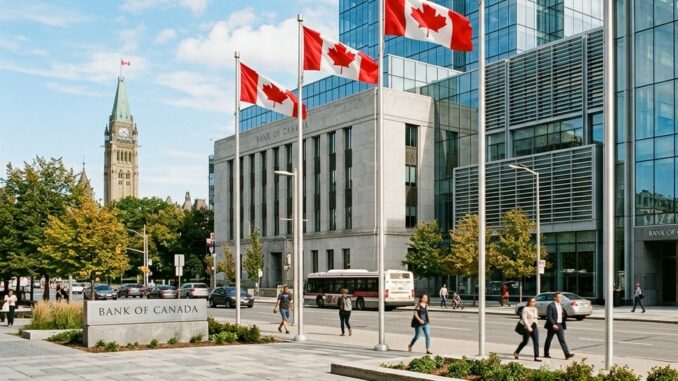
The economic landscape is shifting rapidly, and every Canadian from coast to coast is feeling the ripples in their daily lives. On Wednesday, the financial world turned its collective attention to Ottawa for the highly anticipated bank of canada rate decision today. The result? The central bank opted to hold its key policy interest rate steady at 2.25 percent. This critical milestone marks the sixth consecutive time the institution has chosen to maintain the status quo, carefully navigating a precarious balance between global uncertainty, international trade tensions, and a surprisingly resilient domestic economy.
The bank of canada interest rate announcement today brought a wave of relief to some homeowners and continued anxiety to prospective buyers. Following a rather rocky start to the year, marked by sluggish corporate performance and unexpected economic contractions, the central bank now sees clear, undeniable signs of a rebound. However, persistent inflation driven by geopolitical conflicts ensures that the bank of canada interest rate decision was not made lightly. Governor Tiff Macklem expressed a sense of cautious optimism, noting that economic growth appears to have definitively resumed, even as external risks remain elevated. As everyday Canadians digest this major boc rate announcement, understanding the underlying factors is absolutely crucial for future financial planning and household budgeting.
Table of Contents
Decoding the Latest Bank of Canada Rate Decision
When the official bank of canada interest rate announcement crossed the news wires, it confirmed exactly what the financial sector had been forecasting. All thirty-six economists surveyed by major financial outlets ahead of time had predicted exactly this outcome: no change. The Bank of Canada interest rate right now remains locked firmly at 2.25 percent. But what does this actually mean for the broader Canadian economy?
For the past year, the frustrating phenomenon of rising inflation coupled with slow economic growth has posed a formidable dilemma for policymakers in Ottawa. The traditional playbook states that raising the interest rate helps combat inflation by cooling consumer spending, but lowering it is necessary to stimulate economic growth when GDP stalls. By holding the bank of canada interest rate steady once again, officials are essentially letting the current monetary policy do its heavy lifting, confident that the economy is finally pushing through recent headwinds without the need for further intervention.
The detailed bank of canada rate announcement provided a fascinating look into the central bank’s internal mindset. A surprising contraction in the first quarter, where annualized growth was initially expected to be a healthy 1.5 percent, raised serious alarms. Yet, as consumer and government spending rapidly picked up steam moving into the spring, those temporary drags subsided. The bank now predicts with confidence that the economy will grow by a solid 2.5 percent in the second quarter. Furthermore, a strong resurgence in exports is heavily anticipated to provide a much-needed boost to business investment in the coming months, indicating that Canadian industries are finding their footing on the global stage.
This particular interest rate announcement is a testament to extreme patience. The policy interest rate is currently deemed to be at the exact right level to eventually bring inflation back down to the target of two percent. However, the governing council remains incredibly vigilant and ready to pivot if the economic winds shift abruptly. For now, the bank of canada rate decision reflects a prudent wait-and-see approach, giving the economy the essential breathing room it needs to stabilize organically.
Our Prediction: Bank of Canada Rate Freeze Expected on July 15 Amid Trump Trade Fallout and Oil Spike
The Inflation Conundrum: Oil Prices and the Produce Aisle
Despite the highly optimistic growth projections, inflation remains a stubborn, frustrating adversary for the average consumer. In May, overall inflation ticked up further to 3.2 percent, primarily driven by soaring fuel costs and an agonizing spike in food prices. The ongoing, escalating war in the Middle East, particularly renewed hostilities and complex naval blockades involving Iran, has sent global oil prices surging to multi-week highs. This geopolitical instability across the globe directly and immediately translates to higher prices at the gas pump for everyday Canadians commuting to work or dropping their kids off at school.
But it is certainly not just gasoline that is causing massive sticker shock. The produce section at the local grocery store has become a literal battleground for household budgets. Fresh vegetables have seen particularly sharp, punishing price increases. Tomatoes, for instance, cost a staggering 45 percent more than they did just one year ago. This raises a critical, burning question for the bank of canada: are these sharp price spikes isolated incidents, or are they dangerously spilling over into the broader economy and affecting the cost of all goods?
Governor Macklem addressed this directly and firmly during his press conference, stating that while the central bank often attempts to look through the direct effects of higher oil prices on inflation, prolonged elevation drastically increases the risk that those costs spill over into other everyday goods and services. So far, officials do not believe the higher cost of gasoline is significantly impacting other product categories, but they are guarding against it fiercely. The bank predicts inflation will remain uncomfortably elevated through June before finally easing in the second half of the year, eventually hitting the 2.5 percent mark and returning to the target by early 2027. If gas prices move up again and remain high, Macklem warned that a series of rate hikes are still entirely on the table, reiterating that the bank will absolutely not let higher oil prices become persistent, entrenched inflation.
What This Means for Everyday Canadians and Bank Interest Rates Canada
For the average citizen sitting at their kitchen table paying bills, the bank of canada interest rate has profound, everyday implications. It directly influences everything from monthly mortgage payments to the return on retirement savings accounts. With the policy rate holding steady, the landscape for bank interest rates canada remains relatively stable, offering a predictable environment for both borrowers and savers alike.
If you are currently carrying a variable rate mortgage, this bank of canada rate decision today means your monthly payments or your amortization schedule will likely remain unchanged for the time being. This provides a temporary sigh of relief. Those looking to renew a mortgage or secure a new fixed-rate loan might still face elevated rates, as bond yields, which heavily influence fixed rates, remain highly sensitive to inflation expectations and global uncertainties. The broader interest rates canada landscape dictates that borrowing remains significantly more expensive than it was a few short years ago, urging Canadians to manage their household debt carefully and avoid overextending themselves.
On the flip side of the coin, savers and investors are constantly on the hunt for the best bank interest rates canada. A stabilized, moderately high policy rate means that high-yield savings accounts and guaranteed investment certificates continue to offer incredibly attractive returns compared to the near-zero rates of the past. Many financially savvy consumers are actively researching bank interest rates canada savings to protect their hard-earned purchasing power against the eroding effects of inflation. While finding the absolute highest bank interest rates canada requires diligently shopping around at different financial institutions and credit unions, the current environment is generally very favorable for parking cash in interest-bearing accounts. Understanding these complex dynamics helps households make informed decisions, whether they are aggressively paying down high-interest debt or maximizing their long-term savings potential.
Looking Ahead: The Bank of Canada Rate Decision Schedule
A common, pressing question on the minds of real estate investors, business owners, and homeowners alike is, when is the next bank of canada rate decision? Staying highly informed about the bank of canada interest rate schedule is absolutely vital for long-term financial planning. The central bank operates on a strict, fixed calendar, and knowing the bank of canada rate announcement dates 2026 can help you perfectly anticipate market shifts and adjust your portfolio accordingly.
The next bank of canada rate decision is officially scheduled for September 2, 2026. Following that crucial meeting, the remaining bank of canada rate decision dates for the calendar year are October 28 and December 9. Those frantically searching online for when is bank of canada rate decision will note that the summer months often feature a strategic gap in announcements. This planned pause gives the central bank ample time to assess an extended period of economic data, from summer retail spending to mid-year employment numbers, without making hasty policy shifts.
As we rapidly approach the next scheduled announcement, financial analysts and economists will closely monitor incoming inflation metrics, domestic employment data, and the ever-volatile global oil prices. The upcoming bank of canada rate decision schedule provides specific, predictable milestones where the governing council could either confidently maintain the current path or boldly enact changes if inflation proves stickier than currently anticipated.
A Historic Perspective: Bank of Canada Interest Rate History
To truly appreciate and understand the current economic climate, one must take a step back and look at the Bank of Canada interest rate history. Over the Bank of Canada interest rate last 10 years, Canadians have witnessed incredibly dramatic fluctuations. From historic, unprecedented lows designed to desperately stimulate the economy during global shutdowns, to the highly aggressive hiking cycles required to tame runaway, generational inflation, the policy interest rate has consistently been the primary, most powerful lever pulled by the central bank.
Today’s current rate of 2.25 percent represents a fascinating middle ground. It is significantly lower than the aggressive, painful peaks of recent years but noticeably higher than the near-zero rates that defined the previous decade. This rich historical context beautifully illustrates that the Bank of Canada announcement today is just one single part of a broader, continuous, unending effort to achieve a stable, predictable, and prosperous economic environment for all citizens. Understanding this history helps demystify the bank of canada interest rate decision process, showing it as a thoughtful, highly responsive tool rather than an arbitrary number decided in a vacuum.
Experts like BMO’s chief economist Douglas Porter noted that while positive data led to a more upbeat forecast in the near term, massive global uncertainty is still heavily weighing on any longer-term optimism. Porter pointed out that unpredictable oil prices remain a massive wild card for the bank. Still, the general consensus is that the central bank is in no rush whatsoever to move off the sidelines, even if their public rhetoric sometimes leans slightly hawkish to keep markets in check.
Conclusion: Staying Prepared in a Dynamic Economy
The firm decision to hold the key interest rate at 2.25 percent heavily underscores a period of cautious optimism in Ottawa. Canadian economic growth is genuinely rebounding, yet the dark shadows of global conflict and stubborn produce inflation continue to linger over household budgets. By staying firmly on the sidelines for the sixth consecutive time, the Bank of Canada is allowing the economy to properly digest past rate adjustments while keeping a fiercely watchful eye on potential future risks. Whether you are anxiously monitoring mortgage rates for an upcoming renewal, seeking the best possible savings yields for your retirement fund, or simply trying to understand why the cost of groceries keeps climbing, staying deeply engaged with the central bank’s moves is your absolute best defense in a wildly dynamic financial world.
Frequently Asked Questions
What is the current 5 year mortgage rate in Canada? The five-year mortgage rate in Canada fluctuates daily based on bond yields and individual lender policies. Currently, fixed rates generally hover in the mid-to-high single digits depending on whether the mortgage is insured or uninsured, and the borrower’s credit profile. It is always highly recommended to speak directly with a mortgage broker to find the most accurate and competitive rate for your specific financial situation.
What is the new bank interest rate in Canada? There is no new interest rate at this time. The Bank of Canada recently announced that it is holding its key policy interest rate steady at 2.25 percent. This marks the sixth consecutive time the central bank has decided to keep the rate unchanged, as they monitor inflation and economic growth.
Which bank gives the 7% interest rate on savings accounts? Seeing a seven percent interest rate on a standard savings account is incredibly rare in the current economic climate. Occasionally, digital banks or credit unions may offer highly aggressive promotional rates for a very short introductory period to attract new clients. To find the highest returns, consumers must regularly compare high-yield savings accounts across various online institutions, but expecting a permanent seven percent return on a basic savings account is unrealistic today.
What is the Bank of Canada’s interest rate right now? Right now, the Bank of Canada’s target for the overnight rate, often referred to as the key policy interest rate, sits precisely at 2.25 percent. The bank decided to hold this rate steady during their most recent announcement to balance the need to control inflation with the desire to support ongoing economic growth.
How much is a mortgage on a $500,000 house in Canada? The monthly payment on a 500,000 dollar home depends entirely on your down payment, your chosen amortization period, and your specific interest rate. For example, if you put down twenty percent and secure a standard fixed rate over a twenty-five-year amortization, your monthly payments will look vastly different than someone putting down five percent with a variable rate. Using an online mortgage calculator with current rates is the easiest way to estimate your exact monthly obligation.
Leave a Reply