
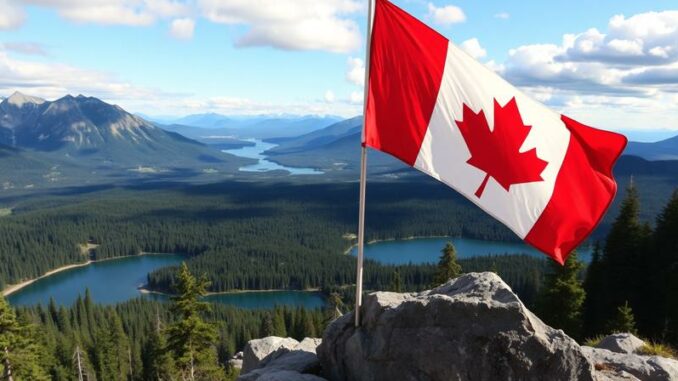
Canada is often celebrated for its breathtaking landscapes, multicultural society, and welcoming reputation. Yet beyond its famous mountains, maple syrup, and snowy winters lies a country filled with remarkable records, fascinating traditions, and astonishing natural wonders. As the second-largest country in the world by land area, Canada continues to surprise visitors and residents alike with its immense geography, rich history, and unique cultural characteristics.
From having more lakes than the rest of the world combined to being the birthplace of basketball, Canada stands out as one of the most extraordinary nations on Earth. Here is a closer look at some of the most fascinating facts that make Canada truly unique.
Canada’s Enormous Size Continues to Impress
Canada covers nearly 9.98 million square kilometers, making it the second-largest country in the world. Its vast territory stretches from the Atlantic Ocean in the east to the Pacific Ocean in the west and reaches deep into the Arctic in the north.
The country is so large that it spans six different time zones. Traveling across Canada can involve crossing thousands of kilometers while still remaining within the same national borders.
The Longest Coastline on Earth
One of Canada’s most impressive geographical distinctions is its coastline. With nearly 202,080 kilometers of coastline touching three oceans, Canada has the longest coastline of any country in the world.
Its shores border the Atlantic Ocean, Pacific Ocean, and Arctic Ocean, creating an extraordinary variety of ecosystems, marine wildlife habitats, and scenic landscapes.
More Lakes Than Any Other Nation
Canada’s freshwater resources are unmatched. The country contains more lakes than all other countries combined, accounting for a significant portion of the world’s freshwater supply.
From massive bodies of water such as Great Bear Lake and Great Slave Lake to countless smaller lakes scattered throughout the provinces and territories, water plays a central role in Canada’s geography and economy.
A Country Rich in Forests and Natural Resources
Canada is home to approximately 10 percent of the world’s forests. These vast woodlands stretch across millions of hectares and support diverse ecosystems filled with wildlife.
The country’s forests provide habitat for countless species while also contributing significantly to the national economy through forestry, tourism, and environmental conservation efforts.
Wildlife That Defines the Nation
Canada’s wilderness supports some of the world’s most recognizable animal species. Among them is the beaver, one of the country’s official national symbols.
The beaver played a major role in Canada’s early economic development through the fur trade and remains a powerful symbol of perseverance and industriousness.
Other iconic Canadian wildlife includes moose, polar bears, caribou, wolves, and countless bird species that thrive across the country’s varied environments.
The World’s Longest International Border
Canada shares the longest international land border on Earth with the United States. The border extends more than 8,891 kilometers and remains one of the most peaceful international boundaries in the world.
Despite the country’s immense size, roughly 90 percent of Canadians live within 160 kilometers of the U.S. border. This concentration reflects both historical settlement patterns and the more moderate climate found in southern regions.
Why Most Canadians Live Near the Border
Northern Canada experiences some of the harshest climates on the planet. As a result, most major cities and population centers developed closer to the southern border, where conditions are generally more favorable for agriculture, industry, and transportation.
Cities such as Toronto, Montreal, Vancouver, Calgary, and Ottawa are all located relatively close to the U.S. boundary.
The Birthplace of Basketball
One of Canada’s most influential contributions to global sports came in 1891 when Canadian educator Dr. James Naismith invented basketball.
Seeking an indoor activity for students during winter months, Naismith created a game that would eventually become one of the world’s most popular sports. Today, basketball is played professionally and recreationally across nearly every continent.
A Canadian Innovation That Conquered the World
What began as a simple gymnasium game has evolved into a global sporting phenomenon watched by millions of fans each year.
Naismith’s invention remains one of Canada’s most significant contributions to international culture and athletics.
The Remarkable Story of Santa Claus and Canada
Canada embraces the magic of the holiday season in a unique way. The country recognizes Santa Claus as a Canadian citizen and receives letters addressed to the North Pole postal code H0H 0H0.
Every year, volunteers help respond to thousands of letters sent by children from around the world, creating one of the most heartwarming traditions associated with the holiday season.
A Postal Tradition Unlike Any Other
The special postal code has become internationally recognized and reflects Canada’s playful and family-friendly approach to celebrating Christmas traditions.
Quebec’s Maple Syrup Empire
Few products are more closely associated with Canada than maple syrup. The province of Quebec dominates global production, accounting for approximately 70 to 75 percent of the world’s maple syrup supply.
Maple syrup production has become such an important industry that Quebec maintains a strategic reserve designed to stabilize supply and protect against poor harvest seasons.
The Importance of Maple Syrup to Canada
Maple syrup is not only a major agricultural product but also an important part of Canadian identity and culinary culture.
Each spring, sugar shacks across Quebec and other provinces welcome visitors eager to experience traditional syrup-making practices that have been passed down for generations.
The Giant Beaver Dam Visible From Space
Canada’s wilderness continues to produce astonishing natural phenomena. In Alberta, researchers identified what is considered the world’s longest known beaver dam.
Stretching hundreds of meters in length, the structure demonstrates the remarkable engineering abilities of beavers and has become famous for being visible from satellite imagery.
Nature’s Master Builders
Beavers construct dams to create stable aquatic habitats that provide protection from predators and access to food sources.
The Alberta mega-dam highlights the extraordinary impact these animals can have on entire ecosystems.
Home to the Highest Tides on Earth
The Bay of Fundy, located between New Brunswick and Nova Scotia, experiences the highest tides recorded anywhere on Earth.
During peak tidal cycles, water levels can rise by as much as 16 meters, dramatically transforming the coastline over the course of a single day.
A Natural Wonder That Attracts Visitors Worldwide
The Bay of Fundy’s powerful tidal movements create unique opportunities for sightseeing, scientific research, and outdoor recreation.
Visitors can witness landscapes that alternate between exposed ocean floor and deep water within just a few hours.
Canada’s Famous Culture of Politeness
Canada’s reputation for politeness has become famous around the world. While often exaggerated for humor, the country’s emphasis on courtesy has even influenced legislation.
When Saying “Sorry” Isn’t an Admission of Guilt
Ontario introduced the Apology Act in 2009, clarifying that an apology cannot automatically be interpreted as an admission of legal liability.
The law reflects the cultural importance many Canadians place on expressing empathy and maintaining respectful social interactions.
A Proudly Bilingual Nation
Canada recognizes both English and French as official languages, making bilingualism a defining feature of national identity.
French-speaking communities are found throughout the country, with Quebec serving as the center of Francophone culture in North America.
Diversity Beyond Language
Modern Canada is one of the world’s most multicultural societies. Immigration from around the globe has helped shape vibrant communities that contribute to the country’s economic strength, cultural richness, and international outlook.
Why Canada Continues to Fascinate the World
Canada’s combination of immense natural beauty, record-breaking geography, unique traditions, and cultural diversity makes it unlike any other country on Earth.
Whether it is the world’s longest coastline, the highest tides, a giant beaver dam visible from space, or a postal system that answers children’s letters to Santa Claus, Canada consistently offers stories that capture the imagination.
As the nation continues to grow and evolve, its remarkable landscapes, welcoming communities, and extraordinary achievements ensure that Canada remains one of the world’s most fascinating places to explore and understand.
Leave a Reply