
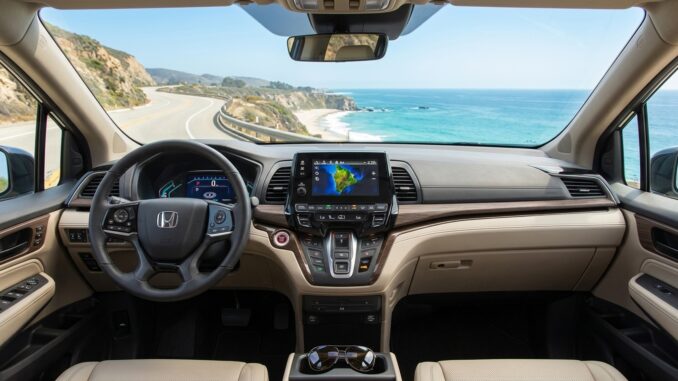
A major automotive safety notice has just been issued across North America, sending ripples through the community of family-vehicle owners. Honda Canada, alongside its American counterpart, Honda Motor America, has officially announced a massive recall affecting hundreds of thousands of its highly popular Odyssey minivans. The issue at the heart of this sweeping campaign is a critical failure in the rear-view camera display system, a feature that modern drivers rely on daily to navigate school drop-offs, tight parking lots, and busy driveways.
As of July 2026, the demand for clear, reliable automotive technology has never been higher. With the sheer size of modern vehicles making rear blind spots more perilous, a malfunctioning backup camera is not just a technological nuisance; it is a significant safety hazard. This latest recall highlights the growing complexity of vehicle manufacturing, where even the slightest miscalculation in assembly can lead to widespread component failure, prompting international regulatory action from both Transport Canada and the National Highway Traffic Safety Administration.
Table of Contents
The Scope of the 2026 Honda Odyssey Recall
The scale of this recall is substantial, reflecting the immense popularity of the Honda Odyssey across the continent. When a manufacturer identifies a defect that compromises driver visibility, the regulatory response must be swift and comprehensive to prevent potential accidents and injuries on the road.
Breaking Down the Numbers in Canada and the United States
In Canada, the automotive manufacturer has confirmed that the recall affects exactly 32,289 Odyssey vehicles scattered across the provinces. Meanwhile, the numbers in the United States are significantly higher, reflecting the larger market size. According to filings with the National Highway Traffic Safety Administration, the U.S. recall encompasses a staggering 325,588 vehicles. Combined, this brings the total number of affected minivans to well over 350,000 units in North America alone.
Identifying the Affected Model Years
Fortunately for brand-new car buyers, the issue is isolated to a specific production window. The recall targets Honda Odyssey minivans specifically from the 2018, 2019, and 2020 model years. Honda has explicitly stated that the affected vehicles are no longer in active production. However, because these model years represent a massive portion of the pre-owned family vehicle market, secondary owners must be incredibly vigilant. If you purchased a used 2018 to 2020 Odyssey recently, you are strongly advised to verify your vehicle identification number through official channels immediately.
The Core Problem: Why Are the Cameras Failing?
To understand why hundreds of thousands of families are being asked to take their minivans back to the dealership, it is essential to look at the exact engineering failure that triggers the camera malfunction. The problem is a textbook example of how minor physical vulnerabilities can lead to major electronic failures over time.
The Engineering Flaw Explained
The root cause of the camera failure traces back to an incredibly specific assembly error on the factory floor. According to detailed technical releases from the manufacturer, the defect involves the relationship between a mounting screw and the rear-view camera housing boss hole. Put simply, the engineering specification for the hole was mathematically inadequate for the specific screw being driven into it.
During the manufacturing process, due to slight variations in the positioning of the housing on the assembly jig, the mounting screw became highly susceptible to misalignment. When factory machinery fastened the screw, the resulting physical stress far exceeded the material strength of the surrounding plastic boss. This microscopic violence caused the internal housing to develop hairline cracks right on the assembly line.
The Role of Water Damage and Corrosion
A hairline crack in a plastic housing might not cause an immediate issue on a sunny day. However, vehicles are subjected to harsh environmental realities, especially in regions like Canada and the northern United States, where severe weather is the norm. Through continuous environmental exposure, specifically the thermal expansion and freezing of trapped moisture, these microscopic cracks slowly expanded over months and years of driving.
Once the cracks widened sufficiently, water was able to easily penetrate the interior of the rear-view camera assembly. This water ingress directly attacked the printed circuit board housed inside. As the circuit board corroded from the moisture, the electronic connection degraded. Eventually, this corrosion leads to the ultimate symptom: the driver shifts the vehicle into reverse, looks at the dashboard display screen, and is met with a blank, black, or heavily distorted image.
Safety Implications and the Changing Face of Automotive Safety
A blank screen on a dashboard might have been considered a minor inconvenience twenty years ago, but in the modern era of automotive design, it represents a severe degradation of driver awareness.
Why Rearward Visibility Matters More Than Ever
Modern vehicles, especially minivans and large sport utility vehicles, are designed with thick rear pillars to support roof strength in the event of a rollover crash. While this design choice vastly improves passenger safety during collisions, it drastically reduces natural rearward visibility. The rear blind spot on a modern minivan is large enough to completely conceal a small child, a bicycle, or a low-profile hazard.
When a driver shifts into reverse expecting the camera to activate, a sudden failure causes immediate disorientation. Failure to display the rear-view image drastically reduces the driver’s spatial awareness, leading to a significantly increased risk of backing over an unseen obstacle, causing property damage, or worse, inflicting severe injury on a pedestrian.
The Legal Landscape of Backup Cameras
The severity of this recall is underscored by strict federal regulations. In both Canada and the United States, backup cameras are no longer considered luxury add-ons; they are legally mandated safety equipment. Since May 2018, all new light vehicles manufactured for sale in these countries must be equipped with rear-view video systems that comply with rigorous safety standards. When a component like this fails systematically across hundreds of thousands of vehicles, the manufacturer is legally obligated to initiate a recall to bring the vehicles back into compliance with federal motor vehicle safety standards.
Honda’s Swift Action and the Sony Solution
Upon recognizing the widespread nature of the printed circuit board corrosion, Honda has initiated a comprehensive remedy program designed to fix the problem permanently at absolutely no cost to the consumer.
Transitioning Suppliers to Fix the Defect
To ensure that this specific moisture intrusion issue never happens again, Honda has made a significant supply chain adjustment. The company is completely abandoning the original camera housing design and has turned to a new supplier for the replacement parts. The upgraded remedy components will now be produced by Sony, a global leader in optics and durable electronics. By shifting to a Sony-manufactured component, Honda aims to provide a robust, waterproof camera assembly that can withstand the harshest winter freezing and summer thermal expansion cycles without cracking or corroding.
What Honda Owners Need to Do Next
If you own a 2018 to 2020 Honda Odyssey, the next steps are clear and straightforward. All registered owners of the affected vehicles will be contacted directly by mail starting in August 2026. The notification letter will detail the exact process for scheduling a service appointment.
Owners are asked to take their vehicle to an authorized Honda dealership. The dealer’s service department will physically remove the old, compromised camera assembly and replace it with the newly engineered, moisture-resistant Sony part. This service will be performed entirely free of charge, regardless of whether the vehicle is still under its original warranty or was purchased on the secondary market.
The Broader Context of Automotive Tech Recalls
This massive minivan recall is a localized symptom of a much broader trend sweeping the automotive industry in 2026. As vehicles transform into rolling computers, the nature of mechanical recalls is shifting dramatically.
The Complexity of Modern Vehicles
Today’s vehicles are incredibly complex networks of sensors, displays, and automated systems. We are currently living in an era where the foundational architecture of the internet is shifting toward AI data centres to process massive amounts of real-time information, and our cars are attempting to mimic that connectivity on the road. With millions of lines of code and hundreds of delicate microprocessors dictating everything from steering column weight to fuel injection rates, the points of potential failure have multiplied exponentially.
While the Odyssey recall is fundamentally a hardware defect caused by physical cracking, it ultimately results in the failure of a critical digital display interface. This intersection of physical manufacturing flaws and digital system failures is becoming the standard narrative for modern automotive safety alerts.
From EV Demand to Supply Chain Pressures
Automakers are currently navigating an incredibly volatile global market. Between fluctuating consumer demand for electric vehicles, intense pressure from international competitors, and the ever-present challenges of global supply chain logistics, manufacturers are stretched thin. While companies are pouring billions into future technologies and battery plants, they must simultaneously maintain the massive fleets of internal combustion and hybrid vehicles currently on the road. Recalls of this magnitude require immense logistical coordination to manufacture, ship, and install hundreds of thousands of replacement parts across a continent without disrupting daily operations.
The Psychological Toll on Consumers
For the average consumer navigating the rising cost of living and the pressures of daily life, receiving a recall notice in the mail is an unwelcome source of stress.
Navigating Dealership Repairs Amidst Busy Lives
For families relying on a single minivan to juggle commutes, school runs, and extracurricular activities, giving up their primary mode of transportation for a day at the dealership is incredibly inconvenient. The psychological toll of wondering whether the vehicle sitting in your driveway is safe to operate backward, combined with the logistical headache of scheduling repairs, creates a frustrating experience. Honda’s commitment to providing a permanent Sony-backed fix is reassuring, but it does not erase the hours lost waiting in a service center lobby.
If you suspect your vehicle is part of this massive recall campaign, do not wait for the mail to arrive. Registered owners can proactively determine if their specific minivans are included by entering their Vehicle Identification Number into the official recall database at the manufacturer’s website or by calling the dedicated customer service hotline at 1-888-946-6329.
Frequently Asked Questions About the 2026 Honda Odyssey Recall
How do I know if my specific Honda Odyssey is recalled?
The most accurate way to verify if your vehicle is part of the recall is to locate your 17-character Vehicle Identification Number, which can usually be found on the dashboard near the driver’s side windshield or on the driver’s side door jamb. Once you have the number, visit the official Honda Canada or Honda Motor America recall website and enter it into their search tool. You can also call their customer service hotline directly.
Is the recall repair completely free of charge?
Yes. Under federal law in both Canada and the United States, when a manufacturer issues a safety recall, the required repairs must be performed at an authorized dealership at absolutely no cost to the vehicle owner. This applies to both parts and labour, even if your vehicle is far beyond its original factory warranty period.
What should I do if my backup camera is currently completely black?
If your camera has already failed due to water corrosion and displays a black or distorted image, you should exercise extreme caution when reversing. Rely entirely on your side mirrors, your rear-view mirror, and physically turning your head to check your blind spots. Contact your local dealership immediately to explain that your camera has failed and ask to have the recall remedy expedited.
Can I fix the camera myself or take it to an independent mechanic?
It is highly recommended to have this specific recall performed by an authorized dealership. Dealerships are provided with the exact redesigned Sony replacement parts and the specialized instructions required to ensure the housing is sealed correctly against future water intrusion. Taking it to an independent mechanic or attempting a home repair may result in out-of-pocket costs and could potentially void future manufacturer support for that component.
Will the dealership provide a loaner vehicle while mine is being fixed?
The provision of loaner vehicles or courtesy shuttles varies significantly from one dealership to another based on their specific inventory and local policies. Because replacing a backup camera is generally a relatively quick procedure, many dealerships may only offer a shuttle service or ask you to wait in their lounge. It is best to call your preferred dealership ahead of time to ask about loaner vehicle availability when scheduling your recall appointment.
Leave a Reply